
The journal
Comedy is a production problem: making Live the 15 Minutes.
Published 10 October 2026
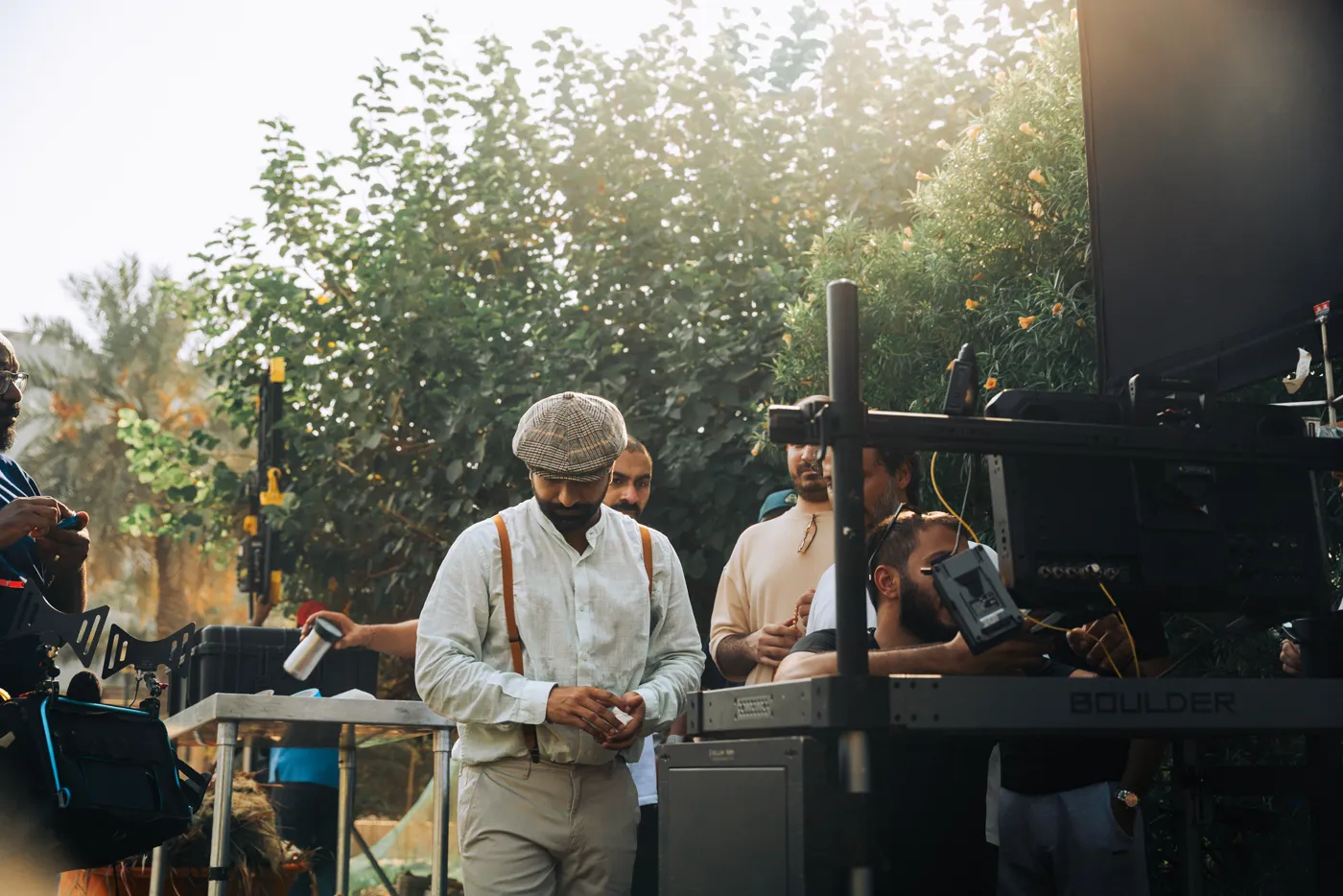
The idea fits in one sentence: a son scoffs at 15-minute grocery delivery, and his mother imagines what fetching the list himself would actually take. The film that sentence became — Tmart's Live the 15 Minutes — needed two shoot days, a crew of more than forty, a farm, a chicken coop, a tractor, and a dhow on open water. That gap between the sentence and the schedule is the whole craft of comedy production.
A joke is a timing document
Comedy forgives nothing. A drama can hold a beautiful shot for an extra second; a gag dies in it. So the edit rhythm gets designed before the shoot — every imagined "errand" needed its setup, its absurd peak and its cut-away, which means coverage planned to the half-second. On set that translates to shooting each beat more ways than a normal film would ever need, because the joke's timing is found in the edit and you can't find what you didn't shoot. It's the same discipline as shoot once, cut forever, with the stakes turned up.
Real places, really dressed
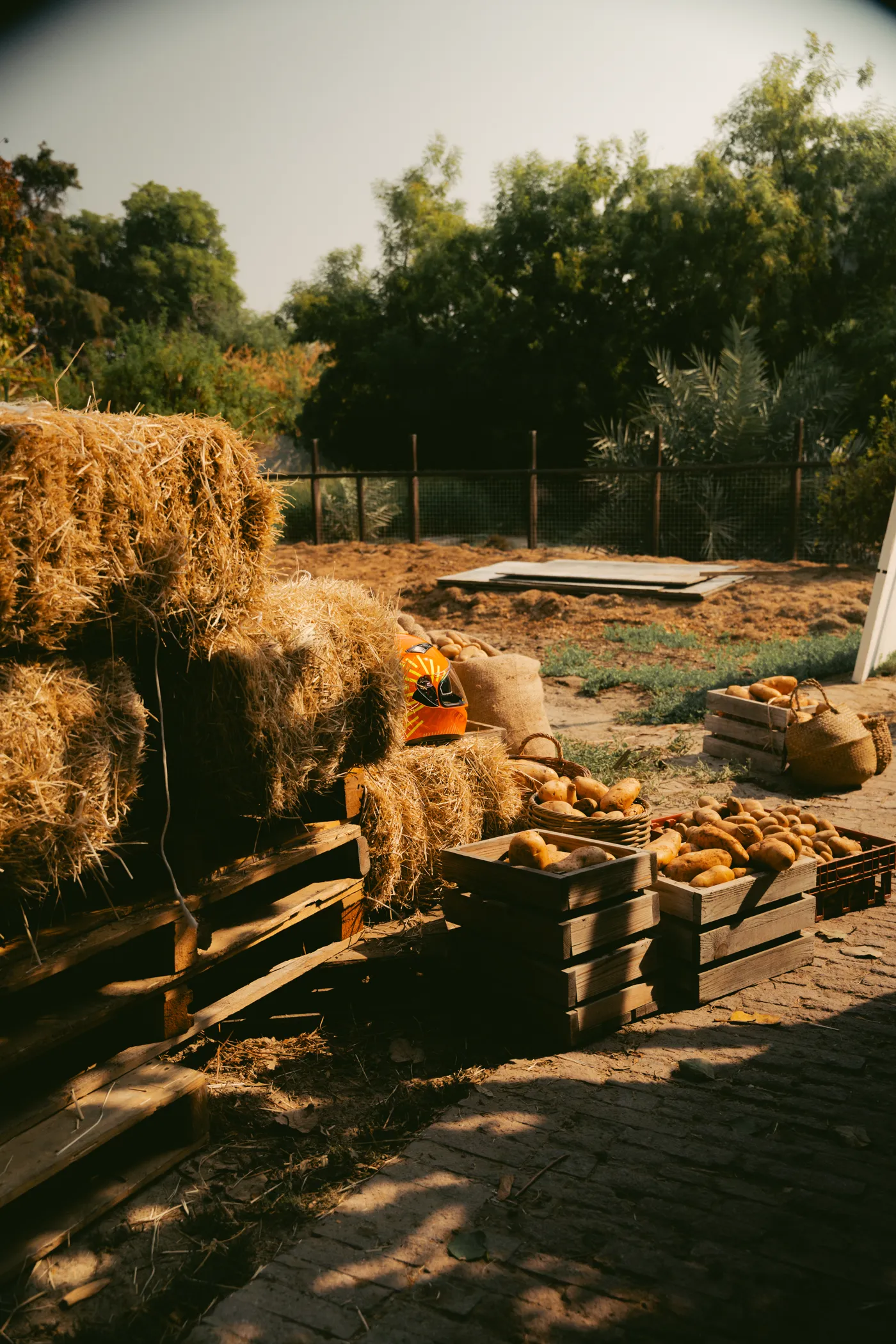
The comedy only lands if the world is played straight — nobody laughs at a joke set in a set. So the art department built it for real: hay bales and crates of potatoes staged on a working farm, a coop with its own cast of chickens, and a village set dressed down to the baskets. The absurdity lives in the premise; everything the camera sees is sincere.
A face that can carry a fantasy
The film rides on Ahmed Sharif, who has to play one man across an entire imagined farm epic — indignant in a hallway, triumphant on a boat, defeated by a cow — and keep him the same person throughout. That's a casting decision as much as a performance: we've argued before that real faces read true, and comedy doubles the requirement, because the audience has to believe him and laugh at him.
Two days, four worlds
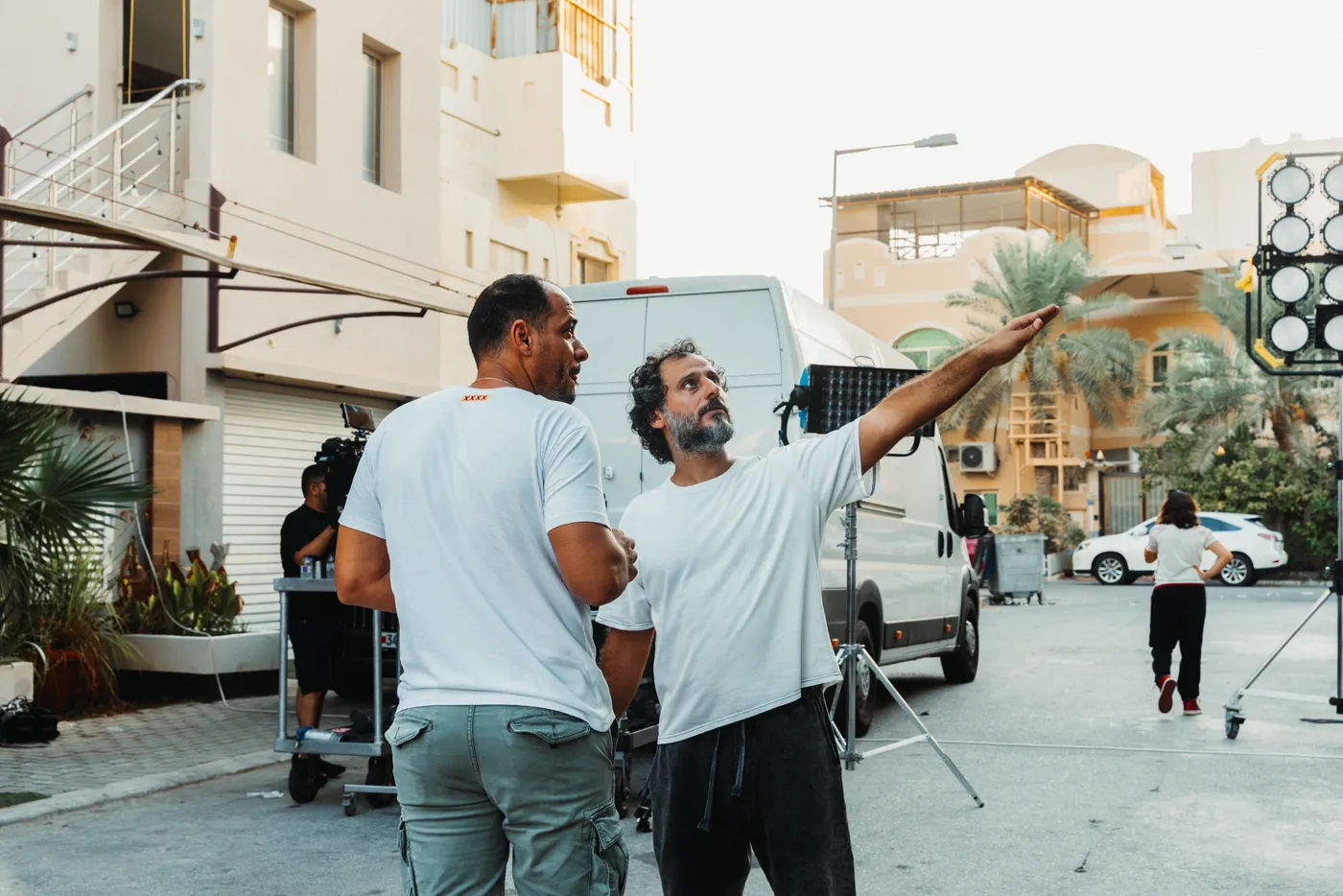
Farms at golden hour, a suburban street, a coop interior lit like a heist, and the sea off Manama with the skyline behind — four worlds in two days, with the same light discipline across all of them so the fantasy cuts as one sequence. The full crew, department by department, is credited on the case study; the short version is that a one-sentence joke employed forty-plus people who all took it completely seriously.
That's the quiet rule of this kind of work: the lighter the film feels, the heavier the production underneath it. It's how we approach every commercial — the full picture is on our video production page.