
The journal
A logo is the door. The brand is the house.
Published 30 August 2026
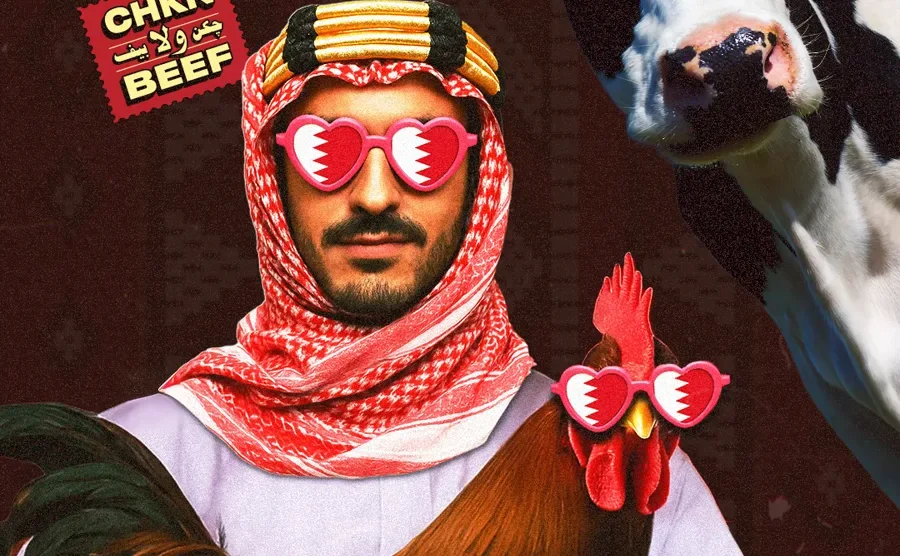
Every branding conversation starts the same way: "we need a logo." And every good one ends somewhere much bigger, because a logo is just the door. The brand is the house.
Six of the identities we've built now live on this site, from street-food stamps to destination brands, and they share almost nothing visually. What they share is everything underneath: a system of decisions that keeps working after we leave the room.
The mark is a decision, not a drawing
A logomark works when it takes a position. Chkn Wala Beef is a stamp that could have hung on souq signage, because the brand's whole point is street authenticity, bilingual and worn with pride. Amakin Pearls ends its wordmark in a single pearl on a wake, Muharraq's pearling history in one gesture. Tokki is a bunny with attitude, because a ghost kitchen has no storefront and the character has to be the restaurant. None of these are aesthetic choices first. They're strategy you can see.
One mark is never enough
The deliverable is never one file. It's the primary mark, the lockups for narrow spaces, the solid single-colour versions for print, and the motif that carries the brand when the logo would be too loud. Cusp & Co.'s spirograph light-form does work the wordmark never could: it gives the brand its energy without the name shouting. And in our market, every system has to answer one more question early: how does it behave in Arabic and English, side by side, at every size?
Identity has to survive contact with the world
A brand book that only works in a deck is decoration. The real test is the room and the street: menus, packaging stickers, mirror decals, truck liveries, LED signage. Botanica rebuilds its world every season, a sunken empire one month and a gold one the next, on a core identity strong enough to hold it. talabat's system gets stretched across photo booths, school stickers and lamppost banners at retainer pace, and never stops being talabat. That's what a system is for.
So what should you ask for?
When you commission an identity, the list is longer than a logo: the mark and its variations, a colour and type system with rules a designer can follow at speed, the voice in both languages, the application kit for whatever surfaces your business actually touches, and guidelines a printer will genuinely read. If a proposal is one logo and a mood board, you're buying a door with no house behind it.
And ask how the identity behaves on day two hundred, not day one. The brands that last are designed for the unglamorous Tuesday, the menu reprint, the new sticker, the next season, without calling the designer back for every decision.
Building a brand, or rebuilding one? This is the work of our branding studio in Bahrain. Start with a conversation.